Highlights
- Duk-koo Kim's tragic death in the ring sparked national debate and led to changes in boxing, including the elimination of 15-round championship fights.
- The aftermath of Kim's death resulted in multiple suicides, including the referee and Kim's mother, who couldn't bear the loss of her son.
- The emotional toll of Kim's death weighed heavily on Ray Mancini, leading to his struggle with depression and a change in his boxing career.
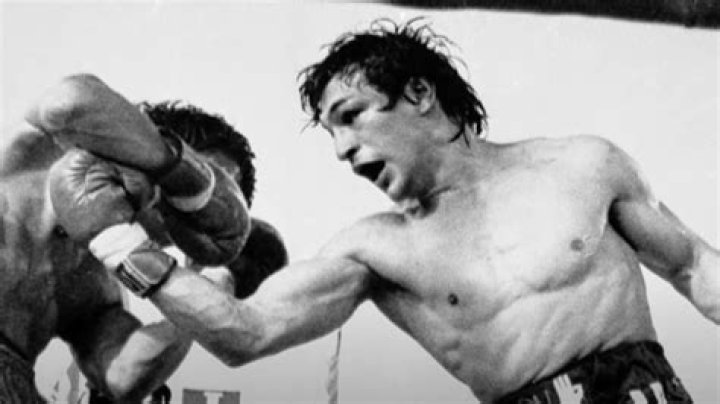
On November 13, 1982, Ray "Boom Boom" Mancini defended his WBA lightweight title against Duk-koo Kim in Las Vegas, marking a pivotal moment in boxing history. The aftermath of this match triggered introspection, tragic consequences, and the eventual elimination of 15-round championship fights in boxing.
Duk-koo Kim, a young Korean fighter, wasn’t the first to die in the ring, he joined the list of many predecessors who passed away as a result of the sport. Nevertheless, those who witnessed the intense 14-round battle between Kim and Mancini at Caesars Palace's outdoor arena still vividly recall the events of that day. It became a catalyst for a nationwide discourse questioning the very existence of boxing, ultimately leading to transformative changes in the sport.
10 Best Boxing Documentaries Ever Made, Ranked
These are the most highly-regarded documentaries higlighting the sport of boxing.Ray Mancini vs. Duk-koo Kim – The Fight That Brought An End To 15-round Fights
Ray Mancini's second defense of his WBA lightweight title unfolded as a brutal, back-and-forth spectacle, characterized by both fighters exchanging powerful blows round after round. The climax occurred in the 14th round when Mancini delivered a decisive straight right hand that sent Kim to the canvas. Despite a valiant effort to rise using the ropes, referee Richard Green halted the fight. Mancini, unaware of the impending tragedy, celebrated his victory.
Post-fight, Kim collapsed, requiring immediate evacuation from the ring on a stretcher. Sports Illustrated reported that during transport to Desert Springs Hospital, the South Korean boxer was only taking four breaths per minute. Dr. Lonnie Hammargren, a local neurosurgeon, conducted a 2½-hour brain surgery on Kim, removing a 100-cc. blood clot from the right side of his brain. Dr. Hammargren attributed the clot to a broken blood vessel, likely caused by a powerful punch to the head. The neurosurgeon characterized the hemorrhage as "fresh," implicating a single impactful blow as the culprit. Meanwhile, back at Caesars, Mancini, upon learning the gravity of Kim's injuries, left his suite accompanied by his parents and Father Tim O'Neill, the family priest, seeking solace elsewhere. Tragically, Kim succumbed to a subdural hematoma four days after the fateful fight.
Despite calls from prominent boxing figures for the implementation of headgear or more heavily padded gloves in the wake of Duk-koo Kim's tragic death, no immediate actions were taken. However, in response to the gravity of the incident, the WBC (World Boxing Council) took a significant initiative by limiting its title bouts to a maximum of 12 rounds. This move aimed to reduce the potential risks associated with prolonged fights.
Following the WBC's lead, both the WBA (World Boxing Association) and WBO (World Boxing Organization) also adopted the 12-round maximum for their title bouts in 1988. Subsequently, the IBF (International Boxing Federation) followed suit in 1989.
- The title bout between Tyrell Biggs and Mike Tyson was the last IBF title fight, which was 15 rounds.
- The IBF long-held the position that there is no medical evidence suggesting that a 15-round fight is more dangerous than a 12-round fight.
5 Children Of Famous Boxers Who Made Their Own Mark In Boxing (And 5 Who Are Still Sitting At The Kids Table)
Like father, like son... we showcase the boxers who became next-generation hits, as well as some who are just cases of boxing nepotism.Two Suicides Followed Duk-koo Kim’s Death
Duk-koo Kim’s Mother And The Referee Of The Fatal Fight Died By Suicide
The aftermath of Duk-koo Kim's death cast a dark shadow, leading to a series of tragic events for those connected to the fateful fight. Seven months after the incident, the referee, Richard Green, took his own life, leaving behind unclear reasons for his devastating decision.
According to the New York Times, Kim's mother, Yang Sun-Nyo, made a journey from South Korea to Las Vegas to be by her son's side before the life support equipment was turned off. However, three months later, she, too, succumbed to despair, tragically ending her own life by consuming a bottle of pesticide. The police, quoting family members, revealed that Kim's mother had been overwhelmed by grief and despondency over the loss of her 23-year-old son.
- Kim's fiancée, Lee Young-Mee, who was pregnant when he died, gave birth to their son, Kim Chi-Wan.
Why Gerald McClellan Deserves No Sympathy From Boxing Fans
Gerald McCellan was once one of boxing's rising stars. A brain injury ended his career, but his involvement in dog fighting shattered his legacy.Ray Mancini Sinks Into Depression
He Was Never The Same Fighter After Duk-koo Kim’s Death
Ray Mancini's Last Four Fights | Opponent | Result | Method |
|---|---|---|---|
Greg Haugen | Loss | TKO | |
Héctor Camacho | Loss | Unanimous Decision | |
Livingstone Bramble | Loss | Unanimous Decision | |
Livingstone Bramble | Loss | TKO |
Ray Mancini, grappling with the emotional weight of the situation, expressed his profound sorrow the day after the fight. In a poignant reflection, he confessed, "I feel miserable, I’m a wreck. I looked at myself in the mirror this morning, and I wondered whether this is all worth it. No amount of money is. But how can I complain when Kim is on his deathbed? I’m praying for him. God must have a reason for doing what he does," he said, per ESPN.
Despite understanding that the risk of death is inherent in boxing, Mancini struggled to reconcile what had happened to Kim with his own moral beliefs. The weight of the tragedy plunged him into a profound state of depression. In an effort to make amends and pay his respects, Mancini attended Kim's funeral in Korea.
The internal struggle led Mancini to question whether he could continue his boxing career. After three months of contemplation, he returned to the ring, traveling to Italy and securing a 10-round decision over George Feeney. However, the Youngstown boxer was hesitant to look for the knockout in the victory and was forever changed. The lingering impact of the events and the toll it took on his spirit and approach to the sport.
After the fight with Duk-koo Kim, Mancini continued his boxing career, stepping into the ring eight more times over the course of the next 10 years. His initial post-Kim fights saw success as he secured victories in the first four matchups. However, the latter half of his career proved more challenging, as he faced defeat in his final four bouts.
One significant moment in Mancini's later career occurred on June 1, 1984, in Buffalo, where he faced Livingstone Bramble. In a hard-fought battle, Mancini ultimately lost the WBA lightweight title via a 14th-round knockout to Bramble. This marked the conclusion of Mancini's championship reign and represented a turning point in his career trajectory.