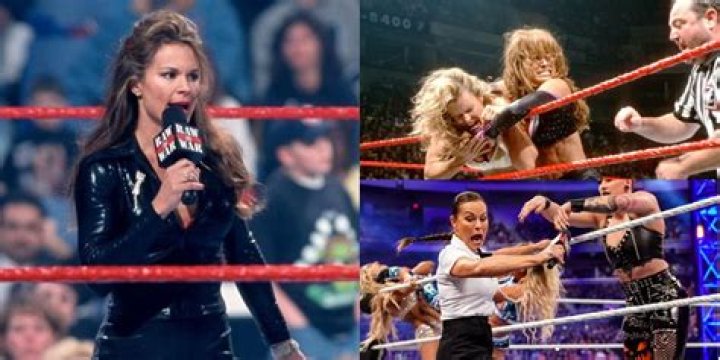
There are quite a few iconic women in WWE history, and a relatively high concentration of them from the Attitude Era and the years to immediately follow. Sunny and Sable were defining sex symbols before and into the earlier stages of Attitude. Chyna was a star all her own, crossing over to work matches with men. Trish Stratus and Lita were two of the most popular figures as the early 2000s bled into the mid-2000s, as women who fused sex appeal with actual in-ring talent and unique forms of charisma to connect with the audience. These years saw featured roles for Jacqueline, Molly Holly, Victoria, Jazz, Tori, Torrie Wilson, Stacy Keibler, and a host of others, too. And then there was Ivory—one of the most talented and versatile women in wrestling during this time period, who too often gets overlooked in conversations about the greats.
Ivory Had A Great But Underrated WWE Run
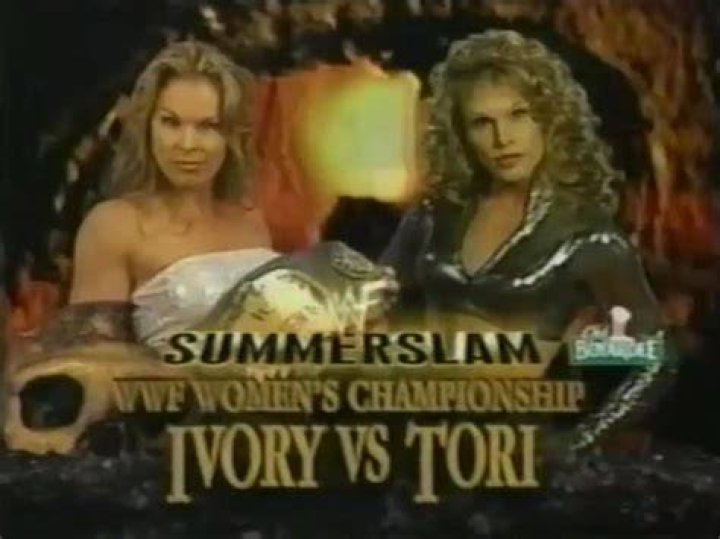
Ivory came to WWE as an experienced hand. While not every woman who performed for GLOW was an accomplished technician, as Tina Ferrari, she justifiably rose to the top of the promotion out of a combination of the sex appeal the company was notorious for capitalizing on and actually having emerged as a legitimate in-ring talent. This foundation set her up to continue working in wrestling years after GLOW had closed its doors, and to ultimately get signed to WWE in 1999 to work as a foundational player for the women’s division they were rebuilding.
Related: 10 Things Fans Should Know About WWE Diva IvoryIn the late 1990s, women like Sable, Debra, and The Kat each enjoyed women's title runs when WWE capitalized on their aesthetic appeal much more so than their wrestling talent. The company needed women who could truly go in the ring to balance things out, though, with names like Jacqueline and Luna Vachon carrying the workload. Ivory was quite arguably an attractive woman, but her abilities in the ring and on the mic were what quickly distinguished her from the pack.
Ivory Grew Bitter With WWE Due To Her Limited Use
In a visit to Steve Austin’s old podcast (h/t Wrestling Inc), Ivory explained her choice to walk away from WWE in 2005. By that point, she had shifted gears to focus on training other talents and working in broadcast roles, and explained, “I was disgruntled because there was still some good action to be had … I was still kind of pissed that I wasn’t in the ring.”
One might compare Ivory’s bitterness with how WWE chose to use her with how other legends of the business have reported feeling at different times. After all, Michael PS Hayes famously spoke to signing with WWE under the impression he’d be an in-ring talent and being disappointed at first when his on-air work was relegated to managing and broadcasting. Hayes did ultimately settle into a prominent role behind the scenes.
There’s also the example of Randy Savage. One of the things that makes little sense about The Macho Man's career was, despite his talent and stardom, getting foisted into color commentary when he still felt he had a lot to give in the ring. This dynamic led to him jumping ship to WCW. There wasn’t a WCW for Ivory to transition to in 2005, nor any likelihood of getting promoted up the ranks backstage, so it does make some sense she disappeared from the national spotlight altogether, riding out her career on the indies.
Ivory’s WWE Legacy Brought Her Back To The Royal Rumble In 2022
Ivory made a surprise one-night return to WWE as a 2022 Royal Rumble surprise entrant, reprising what may well have been her most famous gimmick as a representative of Right to Censor. She cut a promo on her way to the ring, drawing a mix of boos for fans who remembered her heel work from the early 2000s all too well, and cheers for long-time fans who appreciated seeing her in action one more time—at the age of 60 no less.
Related: 10 Most Shocking Surprise Entrants In WWE Royal Rumble HistoryIvory’s Royal Rumble run bespoke her legacy in WWE as a utility player who spent over six years working a range of roles, consistently giving her all, and proving herself as not only one of the most talented, but one of the most versatile women to ever work for the promotion.
Ivory is one of a number of women who went underappreciated in WWE history. She was the kind of talent who probably would have enjoyed greater success had she coming along fifteen-to-twenty years later in a more fully realized women’s division where her talents could draw a spotlight, and she would have had a wider range of athletes to stage great matches with, as opposed to spending so much of her time carrying lesser talents. She was justified in her frustrations with WWE in 2005, and it was the wrestling community’s loss that they didn’t get to see more of her in her prime.