Highlights
- The passionate rivalry between WWE and AEW has resulted in wrestling tribalism, with fans fiercely defending their chosen promotion and engaging in heated debates on social media.
- WWE's creative approach has been transformed under Triple H's leadership, prioritizing fan feedback and resulting in more compelling storylines and in-ring action.
- The competition with AEW has made WWE more attractive to advertisers and broadcasters, leading to increased profits and improved television ratings. The presence of a legitimate competitor has sparked fans' interest and encouraged WWE to up its game.
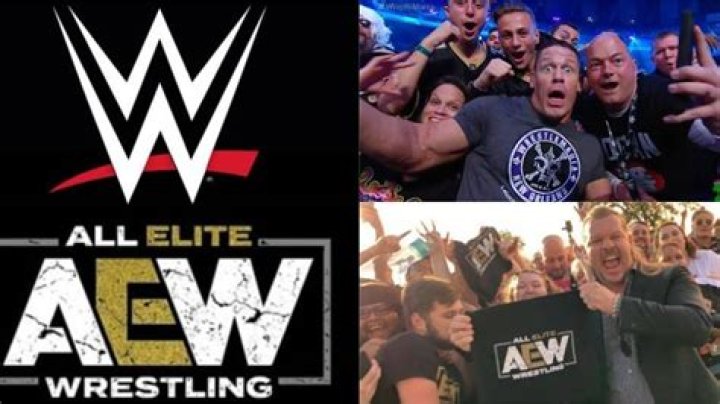
A remarkable transformation is unfolding, masked by the passionate rivalry between two behemoths: WWE and AEW. As the battle lines are drawn and fan allegiances intensify, a complex and intriguing phenomenon emerges. Beyond the fiery exchanges on social media and in the arenas, an unexpected truth begins to surface. WWE, the global juggernaut of sports entertainment, stands at a unique crossroads, and it's not the chaos of tribalism that defines its fate but rather the winds of change blowing in from rival AEW. This transformation, though veiled by the fervor of fan rivalry, has quietly become the catalyst for WWE's renaissance. It's not hard to see the remarkable shift in how the fervent WWE vs. AEW tribalism is, in a twist of fate, actually nurturing WWE's growth and evolution.
Wrestling Tribalism Has Taken Over Social Media
The wrestling world has always been passionate, with fans forming deep connections to their favorite promotions and wrestlers. However, the emergence of AEW as a formidable competitor to WWE has intensified this passion, leading to a division among fans reminiscent of tribalism. For many fans, their wrestling allegiance has become a core part of their identity. They proudly declare themselves as either "Team WWE" or "Team AEW." This loyalty goes beyond mere entertainment; it represents a sense of belonging to a particular wrestling tribe. Fans find a community that shares their beliefs, and this tribal identity fosters a sense of camaraderie, as well as rivalry with the other tribe.

Social media platforms, especially Twitter, have become virtual battlefields where fans from both sides engage in heated debates, arguments, and sometimes even confrontations. These online confrontations can range from light-hearted banter to fierce, emotionally charged disputes. Fans vehemently defend their chosen promotion while passionately criticizing the other, often resorting to memes, GIFs, and statistics to make their points. WWE and AEW are not just wrestling companies; they are lifestyle brands. Fans wear merchandise, attend live events, and immerse themselves in the culture of their chosen tribe. Wrestlers themselves have not been immune to this tribalism. Some have openly embraced it, publicly declaring their loyalty to WWE or AEW, further stoking the flames of rivalry. This dynamic can influence a wrestler's popularity and reception among fans.
RELATED: WWE Vs. AEW: Who Has The Better Women's Division?
WWE Has Thrived With Triple H In Creative Control
For decades, WWE enjoyed a virtual monopoly in the world of professional wrestling. This monopoly allowed WWE to operate without significant competition, leading to a somewhat complacent approach to fan feedback. Under the leadership of Vince McMahon, WWE often adhered to its own creative vision, even in the face of vocal criticism and calls for change from fans. This was a period marked by a lack of genuine competition, and the company's financial success was largely unchallenged. AEW not only presented an alternative for wrestling fans but also provided a platform for talents who were underutilized or discontented in WWE. AEW's introduction provided fans with a genuine choice, giving them a fresh and exciting alternative to WWE programming.

Triple H has brought a unique perspective to WWE's creative process. With his vast experience as a wrestler, an understanding of the industry's ever-changing landscape, and a genuine passion for the business, Triple H's influence has been profound. Under his leadership, WWE's creative approach has undergone notable changes. Triple H has emphasized a more fan-centric approach to WWE's creative process. He understands that the success of WWE is intricately tied to the satisfaction of its loyal fan base. By actively listening to fan feedback and understanding their desires, WWE has become more responsive to the audience's expectations. This shift has led to more compelling storylines, character development, and in-ring action, aligning WWE with what fans want to see. With the emergence of AEW as a formidable competitor, Triple H's approach has been vital. The presence of a viable alternative has forced WWE to be more adaptive and responsive to changing industry dynamics. WWE is now more open to making changes and adjustments when needed, ensuring that they remain competitive in the wrestling landscape.
RELATED: There Never Has Been A War Between WWE & AEW
AEW Made WWE Up Its Game
WWE's financial success is a clear indicator of the benefits it has reaped from the rivalry with AEW. The company's profits have reached unprecedented levels. This can be attributed to several factors, including increased television rights deals, merchandise sales, and lucrative partnerships. The competition with AEW has made WWE a more attractive investment for advertisers and broadcasters, leading to these substantial financial gains. Television ratings have been a longstanding measure of a wrestling company's success. WWE's ratings, which had seen a decline in the years leading up to the emergence of AEW, have shown a notable improvement. The presence of a legitimate competitor in AEW has sparked interest among fans who are eager to witness how WWE responds to the challenge.

While WWE's product may not consistently receive universal acclaim, fans have demonstrated a heightened level of investment. Some fans, in their loyalty to WWE, actively engage in the tribalism debate, using it as a motivation to support WWE. This dedication keeps fans talking about WWE and its product, contributing to increased exposure and fan engagement. Whether it's out of rivalry or genuine appreciation, WWE has managed to keep fans talking, which is vital in the world of sports entertainment. While the tribalism itself may be unnecessary because fans can just watch both products and enjoy even more of the sport, its presence has inadvertently encouraged WWE to up its game.